
[DigitalToday reporter Jaewon Choi] The Japanese government has set a goal of deploying 10 million AI robots domestically by 2040 to respond to labor shortages caused by ageing and population decline.
On Sept. 30, in local time, IT outlet TechRadar reported that the Japanese government plans to expand the use of AI robots across 18 areas including manufacturing, logistics, healthcare and care services. Six areas, including manufacturing, logistics, construction, architecture, retail and security, were designated as priority sectors for social demonstration.
The backdrop is a rapid population decline. Under the United Nations' medium-variant projection, Japan's population is expected to fall 6.2 percent to about 112.16 million in 2040 from about 119.58 million in 2030. The median age in 2040 is forecast to be 54, and the share of people aged 65 and older is expected to reach 35.3 percent.
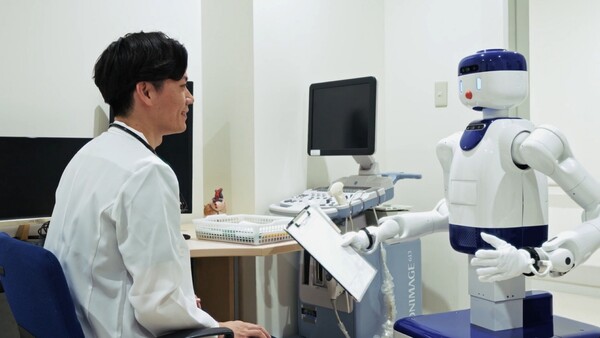
Companies have also begun deployments at worksites. Tokyo-based AI company ZEALS recently unveiled the wheeled humanoid D1. About 129 cm tall, the D1 supports tasks including guiding visitors and carrying items, with prices starting at 5 million yen (about 43.15 million won). The company plans to mass-produce 100 units within fiscal 2026 and secure a cumulative 10,000 hours of on-site operating performance. Last month, a hospital in Nagoya tested five tasks including visitor guidance, carrying items and clearing dishes.
Nagano-based company Kakuiti will accept China's Unitree humanoid G1 as a new employee named 'Miyazawa Noa' in April 2027. It plans to have the robot learn tasks across multiple departments including manufacturing, sales, training and safety management, with Play Robotics providing technical support.
The insurance industry is also moving. Mitsui Sumitomo Insurance, together with ZEALS, arranged insurance coverage for personal and property accidents that could occur during D1 deployment, as well as cyberattacks and information leaks. In July, it also invested in Noetra, which develops a domestically produced physical AI foundation model.
Japan is actively fostering AI robots as a solution to labor shortages, but real gains in productivity and cost reduction, as well as safety, remain tasks to be verified through large-scale deployment at worksites.
 Jaewon Choi
ittt_0801@d-today.co.kr
Jaewon Choi
ittt_0801@d-today.co.kr